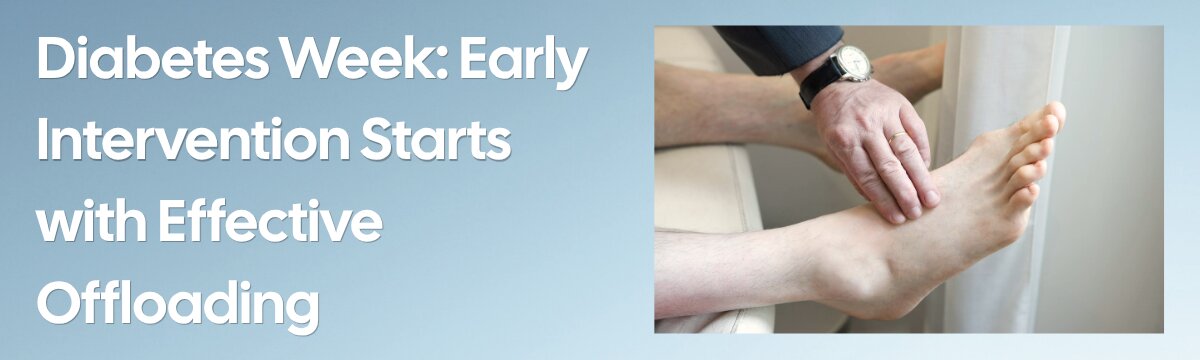
For people living with diabetes, regular foot assessments and early intervention are critical in preventing ulceration, infection and, ultimately, lower limb amputation.
While plantar pressure measurement systems can be valuable, they’re not essential for identifying patients at risk. Simple clinical observations often tell the story. Areas of callus, redness or blistering indicate increased plantar pressure and should prompt further assessment of underlying structural or functional abnormalities.
These signs are also easy for patients to recognise during their own daily foot checks, making patient education an important part of preventing complications.
Early identification of these high-pressure areas provides an opportunity to intervene before tissue breakdown occurs. Combined with appropriate footwear and custom orthoses, effective pressure redistribution can significantly reduce the risk of ulceration and improve long-term outcomes.
Choosing the right orthosis
For clients requiring preventative care, custom orthoses can incorporate cushioning materials such as poron, slow release (SR) poron, plastazote, EVA and neoprene to reduce peak plantar pressures while remaining suitable for everyday footwear.
Patients with active ulceration, previous amputations or severe neuropathy require a more accommodative approach. At iOrthotics, accommodative diabetic orthoses combine an EVA or Envirofoam (TPU) base with SR poron cushioning and a plastazote top cover. EVA provides excellent cushioning and is easily modified to create apertures and targeted offloading, while Envirofoam optimises the accuracy, capability and repeatability of 3D design and FDM printing to incorporate targeted density zones and effective pressure redistribution. SR poron helps attenuate repetitive loading beneath high-pressure areas, and the plastazote top cover moulds to the foot over time, reducing friction and shear at the skin surface.
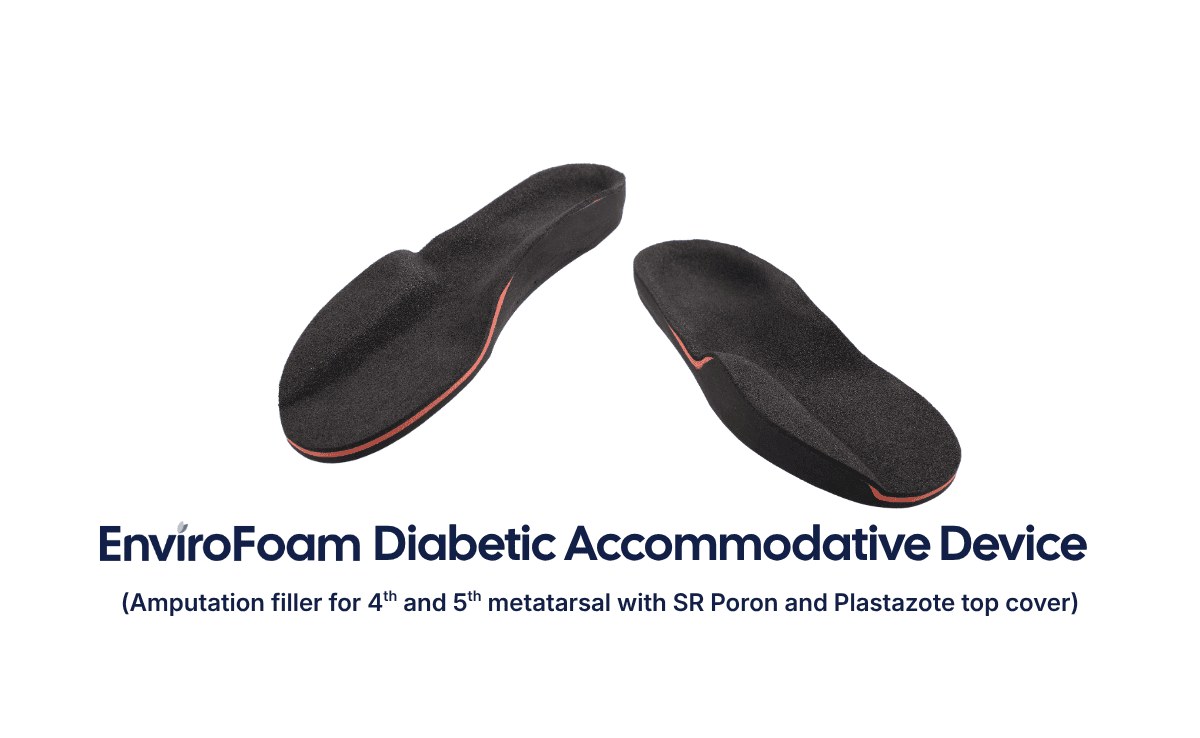
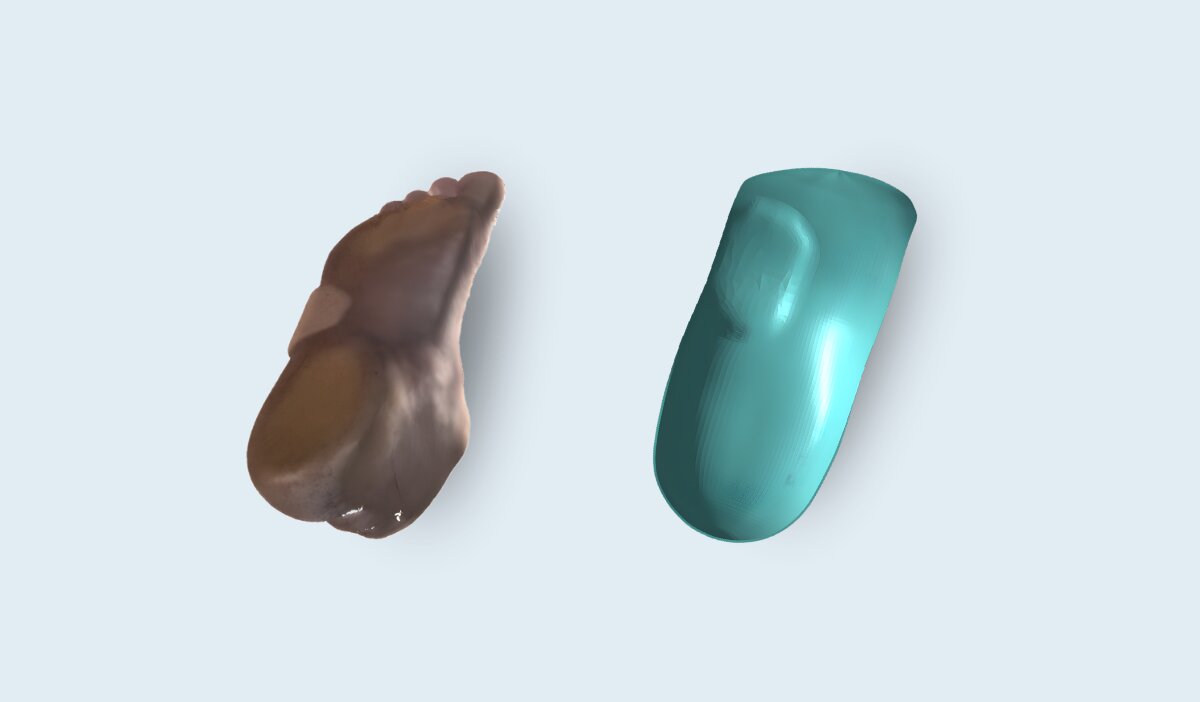
For clients with previous partial foot amputations, custom amputation fillers help replace missing volume, improve stability within the shoe and reduce pressure on adjacent structures. Fillers can be incorporated into both EVA and Envirofoam accommodative orthoses and are designed directly from the 3D scan. Envirofoam offers the added advantage of a lightweight 3D-printed gyroid structure.
Together with a total-contact design, these materials provide effective pressure redistribution. Studies consistently demonstrate that custom contact orthoses reduce plantar pressure more effectively than flat insoles, with CAD/CAM devices providing excellent reproducibility and pressure reduction over time.
Digital design and scanning
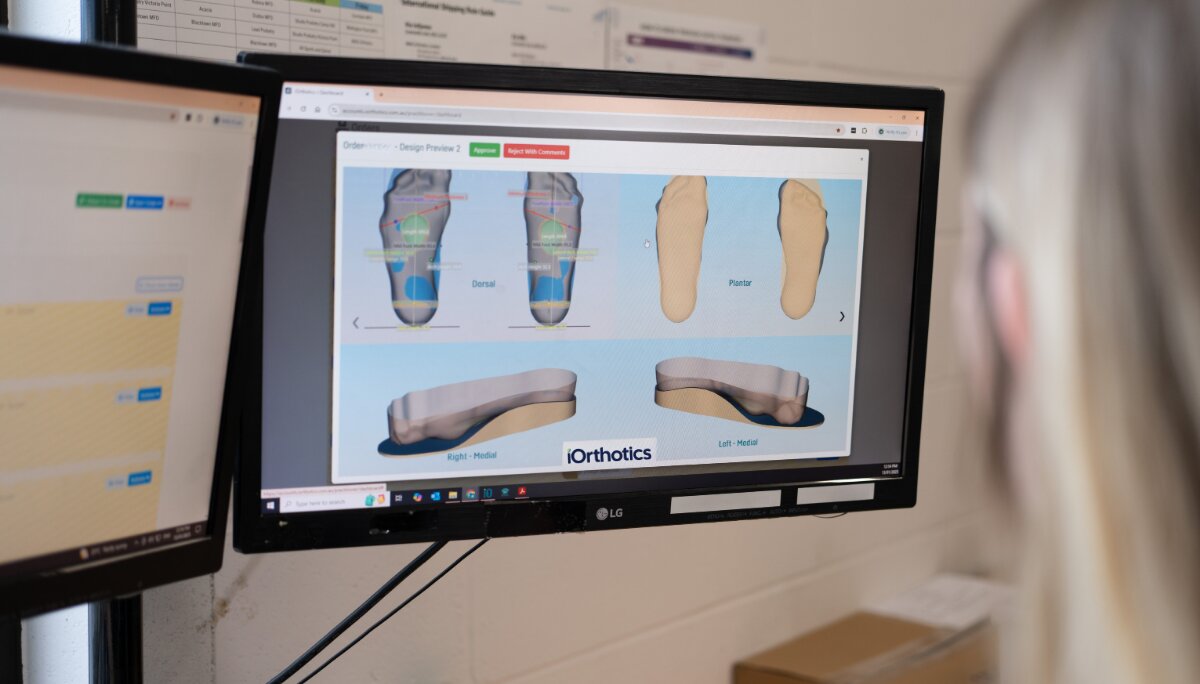
One of the greatest advantages of a digital workflow is consistency. Using 3D scanning, CAD design and digital manufacturing, orthoses can be reproduced accurately as a patient’s foot changes, reducing variability between devices and simplifying future modifications.
For accommodative devices, a partially loaded scan is recommended using a laser flatbed scanner or true-depth capabilities of an iPhone or iPad pro and a scanning plate.
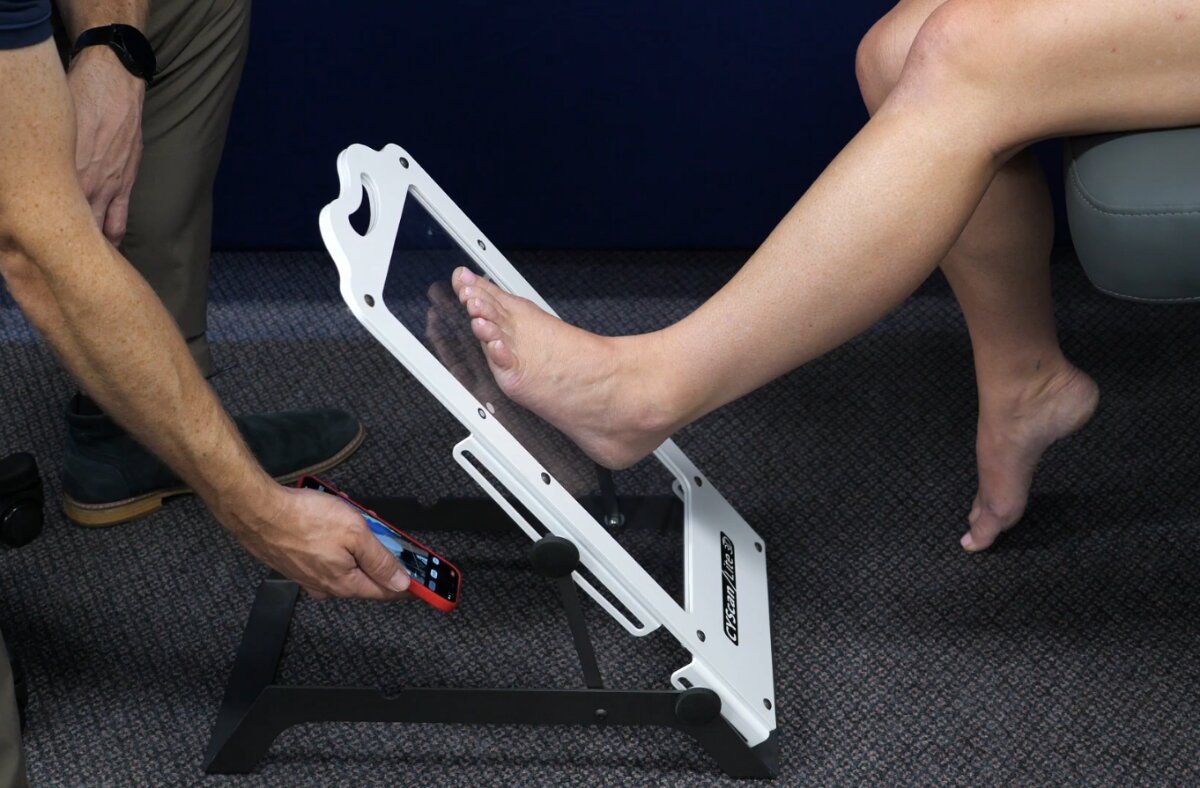
When scanning, clearly mark wounds or areas requiring offloading and upload photographs with the prescription. An even better option is to place 3D markers (such as SCF) over the desired aperture location before scanning. Designing apertures directly from the scan improves accuracy and allows future orthoses to be manufactured with the same offloading strategy time and time again.
Footwear considerations
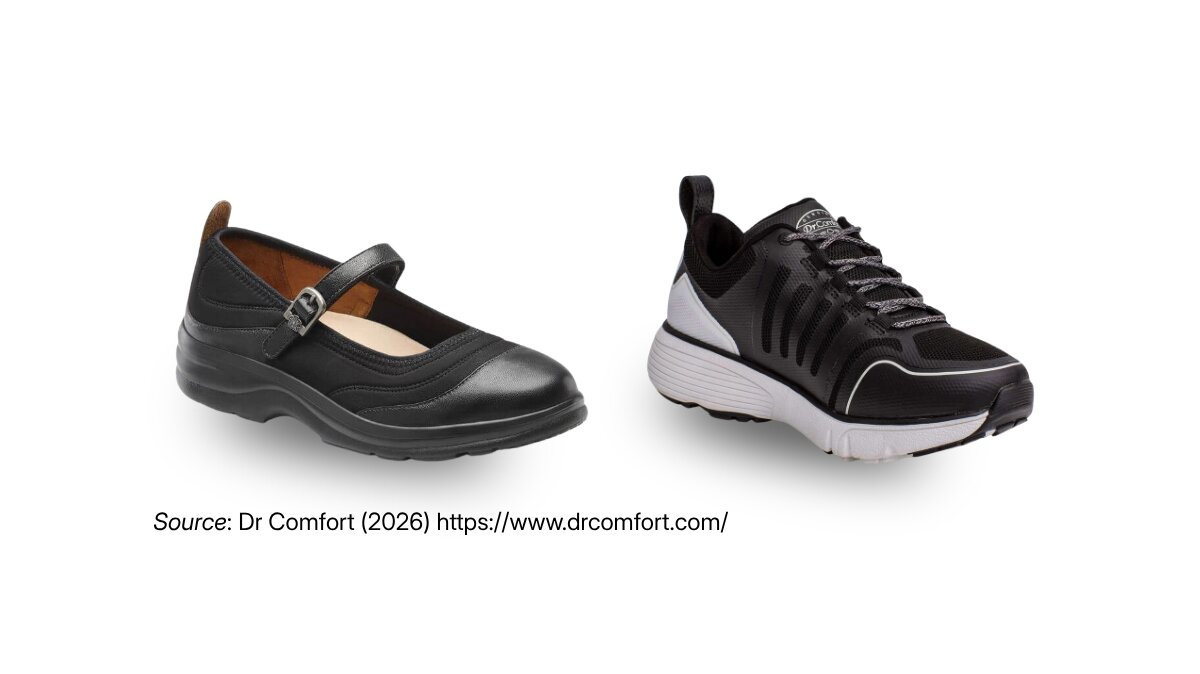
Accommodative diabetic devices are often thicker than standard functional orthoses to allow for apertures and cushioning layers, so adequate width and depth are essential. Medical-grade footwear or extra-depth shoes, including Dr Comfort, Drew, Propet, Anodyne and Saucony, can provide the additional space required for effective offloading. In more complex presentations, custom footwear may be the most appropriate solution — iOrthotics onsite Orthotist, Nidhi Solanki, is available for training and guidance on advanced devices and custom footwear.
Preventing diabetic foot complications is rarely a single intervention, and sufficient preventative care is key.
Regular foot reviews, patient education, early identification of high-pressure areas, appropriate footwear and well-designed custom orthoses all work together to reduce plantar pressure and protect vulnerable tissue. Combined with modern digital manufacturing, these strategies provide clinicians with a highly reproducible way to deliver effective offloading and help keep patients mobile for longer.