As clinicians, we all encounter patients who seem to have tried everything. They’ve seen multiple practitioners, exhausted conservative treatment options and are understandably frustrated that nothing has provided lasting relief.
These cases can be some of the most rewarding, but also the most challenging. They require us to step back, reassess the problem, and ask whether our usual tools are enough.
This case highlights how combining fundamental biomechanical principles with the design freedom offered by 3D manufacturing allowed us to create an orthotic that simply wasn’t possible using traditional manufacturing methods.
The Presentation
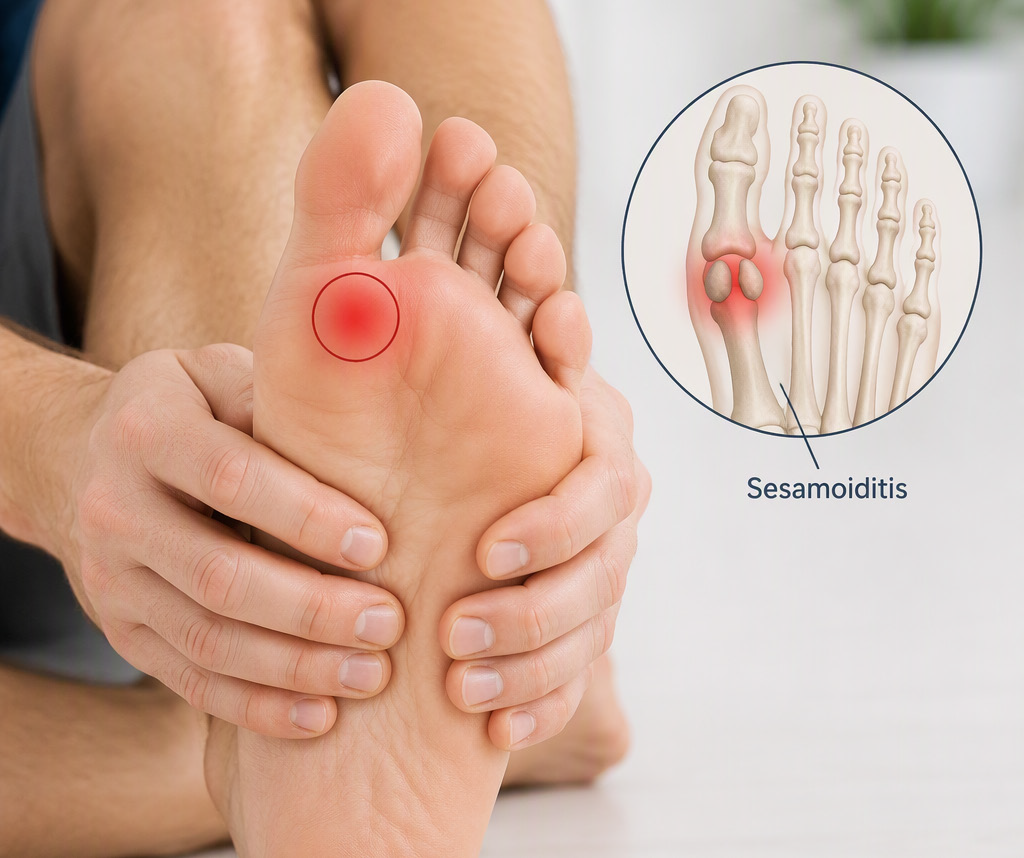
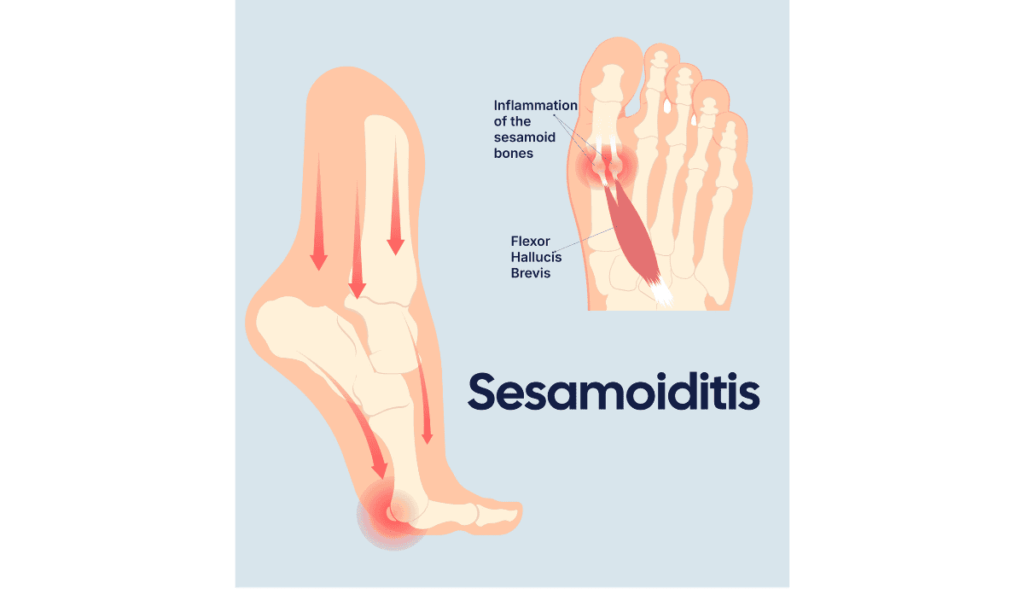
A 35-year-old female presented with a long history of joint-related pain, complaining of unilateral intermittent lateral ankle pain alongside a diagnosis of chronic sesamoiditis. She described pain that was present with weightbearing and progressively worsened with activity. Interestingly, she also reported having “good and bad days,” rating her pain as 8/10 at its worst and averaging around 6/10.
She attended wearing HOKA footwear (model unknown), which had been recommended by a previous clinician to attempt to improve forefoot mechanics.
Clinical assessment demonstrated overpronation throughout the gait cycle, increased mobility, and a tight gastrocnemius-soleus complex.
A History of Failed Conservative Management
This was not a patient who had simply tried one or two interventions.
Over time she had undergone extensive conservative management with multiple clinicians across multiple countries including icing, heat therapy, oral and topical NSAIDs, analgesics, corticosteroid injections, overthe-counter insoles, orthoses, rest, soft tissue release, laser therapy and extensive physical therapy.
The corticosteroid injection provided temporary relief, however the pain returned within a few weeks.
The previous orthoses had been prescribed by a clinician overseas. They consisted of a three-quarter length flexible prefabricated thermoplastic shell with no covers or additions.
The contour was unsatisfactory for the patient’s foot and the device ultimately failed to improve symptoms. Despite all of these interventions, long-term improvement remained elusive.
Developing a Different Plan
Rather than simply producing another standard orthotic, the aim was to look at the underlying loading patterns contributing to both the lateral ankle pain and sesamoid pathology through a different lens.
Firstly, a fully custom bespoke Envirofoam orthotic was designed to improve gait mechanics and better control loading through the foot. Footwear was changed to the ASICS Kayano 32 to ensure the shoe complemented both the patient’s foot type and the orthotic design.
Soft tissue release and dry needling were incorporated to address the tight gastrocnemius-soleus complex, with the intention of progressing to a targeted strengthening and stretching program once symptoms had settled.
Designing the Orthotic
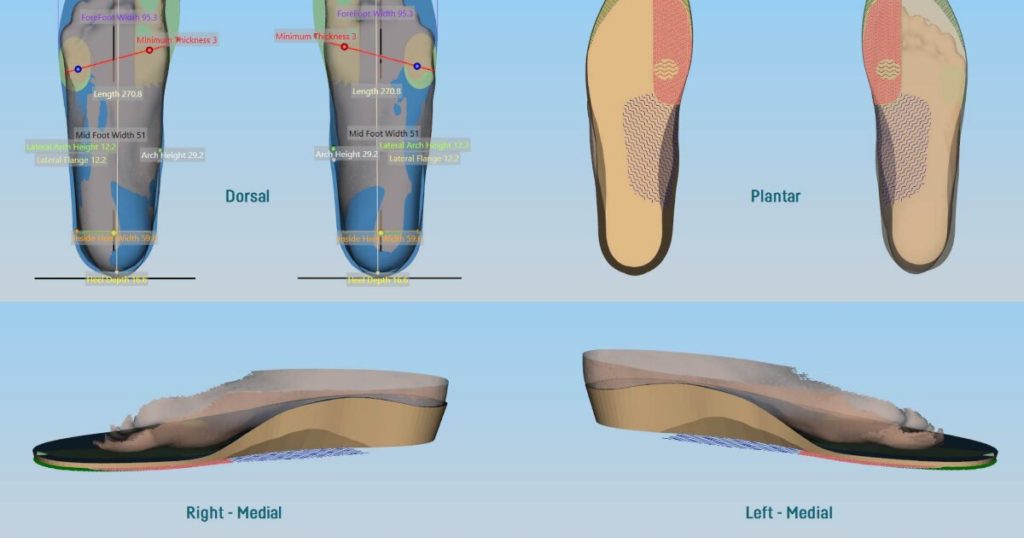
The orthotic itself was a 3 mm thick full-length Envirofoam device with impressions taken in a SWB position on a scan plate utilising the true-depth capabilities of an iPad Pro.
To increase contact area beneath an arch with tight intrinsic musculature and reduce peak ground reaction forces, a Contact A-type medial longitudinal arch profile was selected. Rearfoot control was improved through a 16 mm heel cup with a lateral clip, helping manage the client’s increased rearfoot mobility. A prescription of 6° rearfoot varus, combined with a 1 mm medial skive and 2 mm heel raise, was used to open the ankle and subtalar joints to reduce irritation through the sinus tarsi. Where this device became particularly interesting, however, was within the use of multiple density zones.
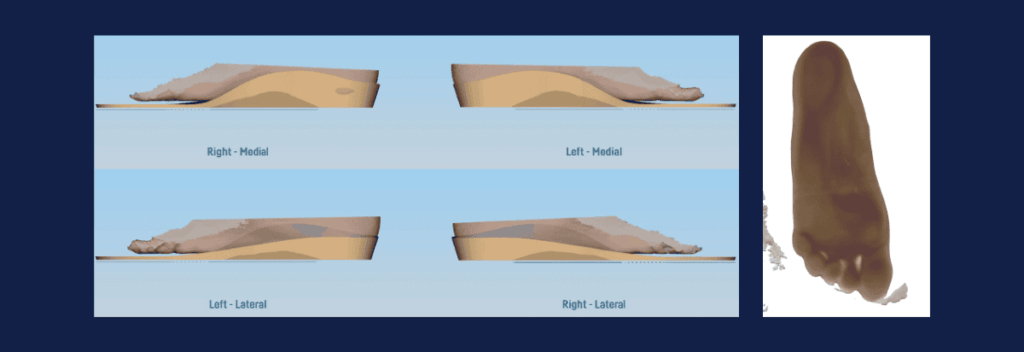
A medium hard base material provided robust overall control. Within the medial longitudinal arch, a medium soft “B-Zone” was incorporated to allow controlled dynamic compression while maintaining support. A solid-density first MTP extension was designed through the 3 mm base with an additional 1.5 mm layer extending from the distal medial longitudinal arch to the end of the device. Functionally, this behaved similarly to a semirigid Morton’s extension, helping control first MTP mobility. Finally, an isolated very soft density zone was positioned directly beneath the fibular sesamoid. The location was communicated precisely to the design team to ensure accurate offloading, and movement in the shoe was considered.
Because so much of the function had already been incorporated into the design, finishing remained intentionally simple. A 3.2 mm Poron PMP cover was applied with a first metatarsal cut-out blended into the first MTP extension. This levelled the forefoot while also assisting sensory feedback. A 1.5 mm neoprene top cover completed the device, again prioritising sensory feedback without unnecessary complexity.
Early Results
The orthoses were fitted one week after prescription. As the patient’s new footwear had not yet arrived, the devices were initially fitted into her existing HOKAs. Immediately, she reported feeling noticeably more stable while walking.
She did, however, describe the sensation that her big toe was “slipping off” the first MTP extension. On assessment, this appeared to be due to the hallux sitting in a valgus position within the shoe, allowing her to perceive the transition between density zones.
Rather than modifying the orthoses immediately, we discussed the likely influence of the footwear and agreed to trial them in the new shoes before making any changes.
One Week Later
Ordinarily, I would not schedule an orthotic review this early. In this case, however, dry needling therapy was commencing and this was a considerably different orthotic from a conventional device, making early monitoring worthwhile. By this stage the patient had also received her recommended shoes and had transitioned into them full time. She already reported a reduction in pain intensity and noticed she could walk considerably longer before symptoms developed.
One Month Review
One month following fitting, the patient had continued attending for dry needling treatment while wearing the orthoses full time. She reported only one episode of mild right lateral ankle pain during the previous two weeks. On further discussion, this episode occurred after spending an entire day walking around the house without wearing her orthoses.
Importantly, the sesamoid pain had not returned since beginning to wear the orthoses in the recommended footwear. She was able to complete her normal day-to-day activities pain free and was excited about gradually returning to a more active lifestyle.
What This Case Reinforced
Cases like this reinforce the importance of communication.
When we’re asking patients to trial something different, particularly after numerous unsuccessful treatments, they need to understand why the approach is changing and what we’re hoping to achieve. Setting realistic expectations is equally important. By this stage, we’re often entering less predictable territory, and outcomes can be more difficult to forecast than with routine orthotic prescriptions.
Frequent review is another critical component. Early follow-up allows us to monitor adaptation, identify issues before they become problems and maintain an ongoing dialogue with the patient. Testing, re-testing and remaining open to modifying the plan are all part of the process.
Final Thoughts
The aim of more novel orthotic designs is not to be different for the sake of being different. It is to solve problems that conventional approaches have been unable to address.
By applying fundamental principles of force and load management, we can redistribute pressure, protect vulnerable structures and create mechanical solutions that would be extremely difficult to achieve using traditional manufacturing methods.
This is not an exact science, nor is there a single “perfect” prescription. Sometimes, the most effective orthotic isn’t the simplest or the most complicated. It’s simply the one designed specifically for the problem in front of you.
3D-design and manufacturing is changing capabilities of orthotic intervention far beyond the restrictions of methods available previously, allowing iOrthotics and our partners to lead the way in innovation.